
Dissolution: What it means, why it’s being brought up, and how it could benefit Mount Morris
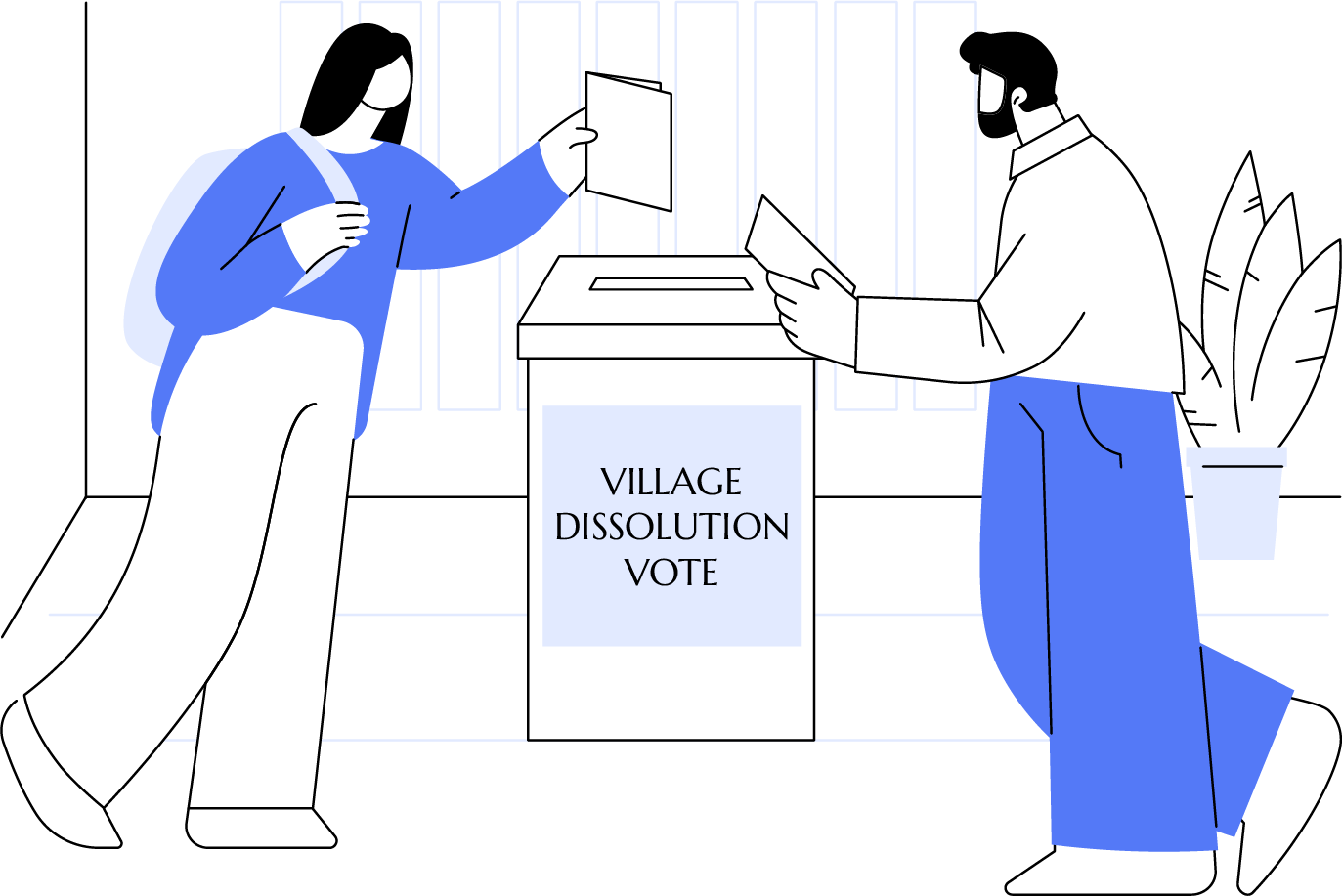
Village dissolution is a legal process under New York State law in which voters within a village choose to formally dissolve their village government, and its governmental functions are assumed by the surrounding town. It does not eliminate the community itself or its identity; rather, it removes one layer of local government. After dissolution, residents continue to live in the same homes, receive municipal services, and pay property taxes, but those services are provided through the town government and, where appropriate, through special districts or contracts. Dissolution is typically considered when residents and officials are evaluating whether maintaining a separate village government remains affordable, sustainable, and effective, especially in the face of aging infrastructure, administrative complexity, and long-term financial pressures.
What is dissolution?
Why has this conversation gradually begun to re-emerge across the community?

Over the years, conversations about the potential dissolution of the Village of Mount Morris have surfaced from time to time. Community projects have often been proposed with optimism, only to be delayed, scaled back, or ultimately set aside, and long-term planning efforts have not always progressed from vision to implementation as originally communicated. Periodically, questions about affordability, sustainability, and long-term capacity resurface as well. Taken together, these experiences have led many residents to reflect on whether the current governmental structure is well-positioned to manage complex, long-range initiatives from planning through completion.
Recently, residents have raised questions about village finances, including how budgets are developed, communicated, and adjusted. Particular concern has centered on aging water infrastructure. The village’s water transmission line, installed over a century ago, has reached a point where repair and replacement can no longer be ignored. While replacing the transmission line—a project estimated in 2022 to cost $12.67 million—is an important step, it does not address the condition of the water distribution lines throughout the village itself, many of which are also aging and would require separate planning, funding, and long-term maintenance. Recurring budget pressures related to infrastructure, regulatory compliance, and routine operations have led some residents to ask whether limited resources are being spread across too many overlapping administrative responsibilities. Questions have also emerged about how large-scale capital needs are prioritized and how future costs are communicated to taxpayers.

At the same time, changes in local policing and public safety coverage have prompted discussion about service levels, coordination, and long-term planning. These conversations have often intersected with broader concerns about transparency—particularly how decisions are made, how information is shared, and how accountability functions within a small municipal framework.
In recent years, additional attention has been drawn to the demands placed on local leadership as responsibilities have become more technical, regulated, and complex. In a community with a limited number of officials and staff, gaps in institutional experience within certain leadership roles have, at times, made it more challenging to manage large infrastructure projects, financial oversight, and compliance requirements simultaneously. This has led some residents to reflect on whether the current structure concentrates too much responsibility within too few roles.
Taken together, these considerations have encouraged some in the community to pause and ask whether the existing arrangement still serves Mount Morris as effectively as it once did. Exploring unification under one government is not about blame or assuming a particular outcome—it is about understanding options and considering whether a simpler structure could better support stability, transparency, and collaboration moving forward.
How would dissolution benefit Mount Morris?
The prospect of Village dissolution offers Mount Morris an opportunity to simplify government, reduce duplicative costs, and strengthen service delivery by operating as one unified municipality rather than two overlapping ones. Today, village residents effectively help support two separate local governments—a village government layered inside a town government—each with its own administrative systems, elected officials, staff, and overhead. Dissolution would eliminate that redundancy by consolidating governance and operations under the Town of Mount Morris.
From a cost perspective, one of the most immediate benefits is the reduction of duplicative administrative expenses. Under the current structure, village taxpayers help pay for two sets of core municipal software systems—two separate costs for the same programs for tax billing and voucher, separate systems for water billing and customer accounts, and separate record-keeping and reporting platforms. Dissolution would allow Mount Morris to operate one integrated tax system, one water billing system, and one set of financial and record-management software, lowering licensing, maintenance, training, and support costs over time.

Similarly, dissolution would streamline staffing and governance. Instead of supporting the salaries and benefits associated with two clerks, a village mayor and a town supervisor, two governing boards, and multiple layers of administrative oversight, Mount Morris would function with a single governing body and administrative structure. This does not mean services disappear; rather, it means fewer duplicated roles and clearer lines of responsibility, reducing long-term personnel and governance costs while improving continuity and institutional knowledge.
Operational efficiency could also improve. Today, the Town Highway Department and the Village Department of Public Works operate as separate units despite the fact that they are both part of the same labor union. Dissolution would allow these functions to be coordinated under a single department, enabling better equipment sharing, unified scheduling, and more efficient use of labor and capital resources. Over time, this can reduce wear-and-tear costs, improve response times, and make long-range infrastructure planning more realistic and achievable.
There are also potential benefits for municipal employees. Currently, town and village highway and DPW workers are represented under separate bargaining units within the same local union structure, despite performing similar work for the same community. Under dissolution, village employees could be integrated with town employees into one larger bargaining unit, strengthening collective bargaining power, simplifying contract administration, and promoting equity and consistency in wages, benefits, and working conditions.